

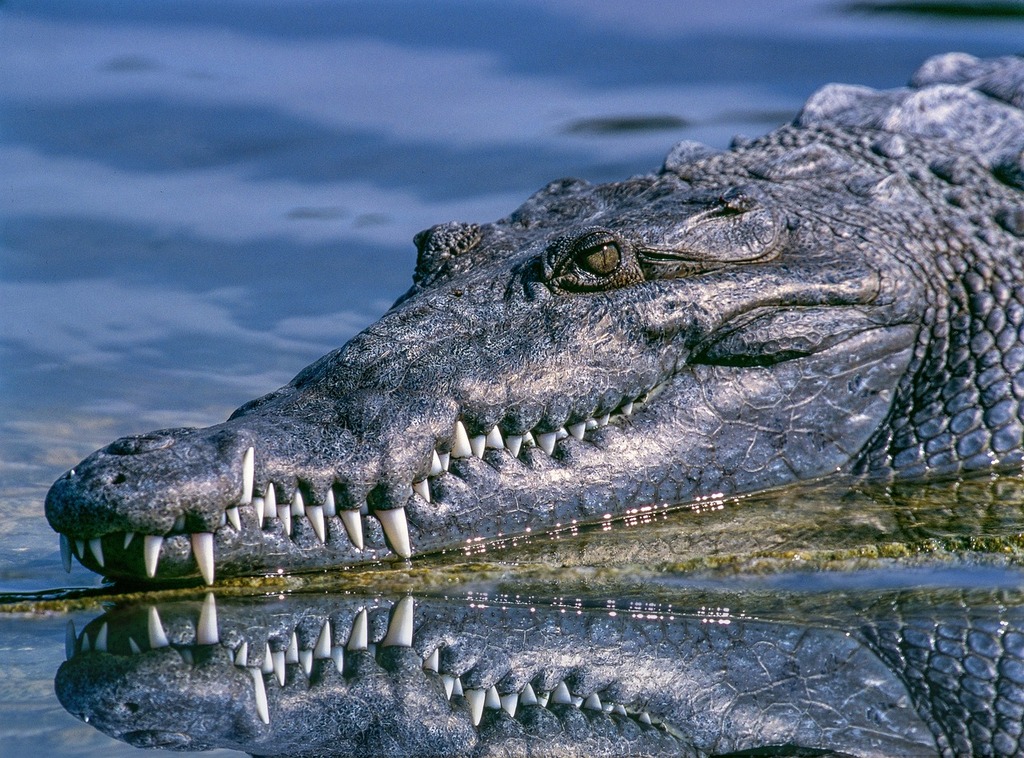

KUALA LUMPUR – Malaysia’s efforts to tackle human-crocodile conflict are being undermined not by a lack of policy, but by weak implementation, leaving vulnerable communities increasingly exposed to danger.
Speaking to Scoop, Universiti Teknologi Malaysia environmental specialist Mohd Fadhil Mohd Din said Malaysia already has a sound policy framework to manage human-crocodile conflict, but implementation remains fragmented, with crocodile-risk assessments still not consistently integrated into development planning.
“Malaysia has an appropriate policy foundation, but implementation remains insufficiently integrated,” he said.

Fadhil pointed to the National Policy on Biological Diversity 2022-2030, which requires biodiversity considerations to be incorporated into national, state and local spatial planning, while promoting science-based coexistence approaches to managing human-wildlife conflict.
He said Sarawak had introduced crocodile removal zones, the Croc Watch application and a dedicated crocodile management plan, while Sabah recently launched its 2026-2028 Human-Crocodile Conflict Mitigation Project.
“These are positive developments. The remaining weakness is that crocodile-risk assessments are not yet consistently embedded in environmental impact assessments, local plans, drainage design and river-basin development approvals,” he said.
Fadhil said development planning remains too focused on individual projects instead of assessing the cumulative impact on crocodile habitats and movement corridors.
“Planning is still too often project-specific and reactive, rather than based on cumulative habitat and movement impacts,” he said.
To strengthen Malaysia’s response, Fadhil proposed establishing a unified, georeferenced database that distinguishes crocodile sightings, captures, attacks, fatalities and survey efforts, enabling authorities to better identify conflict patterns and respond more effectively.
He also called for conservation, controlled-use and crocodile-exclusion zones to be mapped across high-risk river basins, while making crocodile habitat, movement corridor and cumulative-impact assessments mandatory for riverfront and coastal developments.
Among other measures, he urged authorities to protect and restore mangrove and riparian buffers, build enclosed water-collection and bathing facilities, raised or fenced fishing platforms, safer jetties and well-lit boat ramps, and prevent the disposal of fish remains and livestock waste into waterways.
Fadhil stressed that public awareness campaigns alone would not be enough to reduce crocodile attacks, noting that many communities continue to depend on rivers for their livelihoods.
“Education should be continuous, multilingual and location-specific. High-risk communities need school programmes, village drills, visible emergency contact numbers and real-time warnings.
“Crucially, communities that depend on rivers must also be provided with safe infrastructure. Simply telling them to avoid the river is neither equitable nor practical,” he said. – July 31, 2026